
Best of the New
Here I embark on an exploration of rooms teeming with innovation and intrigue. These spaces house a diverse array of cutting-edge products, each boasting unique features and capabilities that are sure to pique the interest of even the most discerning audiophiles. Whether it's a fresh design that breaks the mold or a groundbreaking technology that reshapes the way we experience sound, this is where the exciting developments in the world of audio come to life.
Eminent Technology Plasmatronic Speaker + Plasmatronics Hill Type 1 Plasma Tweeter


Now, I've seen some strange speakers throughout the years, but his one takes the cake. Here we have a Plasmatronic Hill Type 1 Plasma tweeter paired with the Eminent Technology LFT-8 (with the tweeter disconnected). The first thing I noticed was the giant helium tank at the center of the room. Supposedly this needs to be refilled once for every 300 hours of listening. The second thing I noticed were the tiny purple and pink flames in a cage. Bizarre indeed. I was curious enough to do some digging.
History
Plasmatronics, founded by former Air Force Weapons Laboratory scientist Dr. Alan E. Hill, introduced an innovative plasma speaker design at the 1978 Winter Consumer Electronics Show. The product combined a conventional dynamic loudspeaker with an integrated amplifier for low frequencies, and a near-massless plasma speaker as a tweeter. To prevent ozone and nitrogen oxides emissions, the system utilized helium from a tank located at the back of the unit. This unique design was praised for accurate sound reproduction, but faced drawbacks such as high cost and the need to handle heavy compressed helium cylinders periodically.
The plasma speaker technology he developed took around a decade to bring to market. The speaker works by modulating the temperature of a thin sheath, which causes acoustic waves to be launched. Helium is necessary for the speaker's operation due to its high ionization energy and exceptional thermal properties, which contribute to low distortion.
How does it work?
The Plasmatronic speaker technology uses helium to produce sound through a process that is both complex and fascinating. When the plasma speaker is in operation, helium gas is bled into the system, helping to stabilize the frequency and facilitate the formation of plasma. The plasma serves as a near-massless driver, directly exciting air molecules without any moving parts, which leads to a remarkably accurate sound reproduction.
To understand how this technology works, consider an analogy involving a trampoline. In this analogy, the trampoline represents the plasma sheath, while the person jumping on it represents the energy being modulated. As the person jumps, the trampoline stretches and rebounds, launching the jumper into the air. Similarly, when the energy is modulated within the plasma speaker, the sheath's temperature shifts, launching acoustic waves that ultimately produce sound. The helium gas, with its high ionization energy and excellent thermal properties, acts as a supportive medium that ensures the trampoline remains stable and flexible, allowing for precise and undistorted sound production.
Well how did it sound? I thought it was very smooth, liquid, and full-bodied but the tone was a bit more on the cooler, gray side of the spectrum. The volume was a bit low so it came off a bit polite and laid back but I'll have to give it a deeper listen in future shows. Nevertheless, it's some interesting and head-turning technology.
Finley Audio


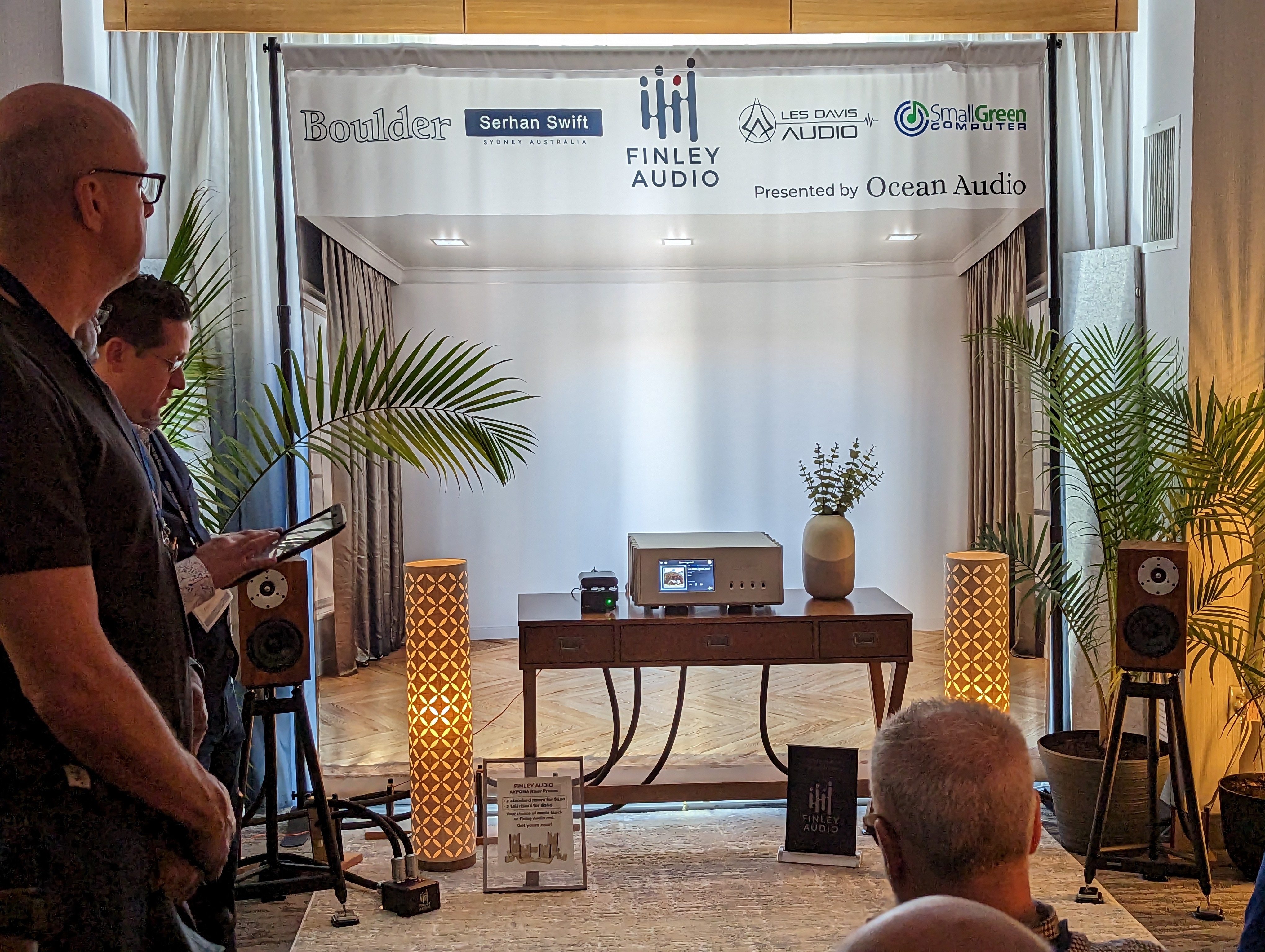
Usually, one exceptional person starts an audio company. Finley Audio emanates from the iterated and refined vision of four dedicated friends who barnstormed audio shows and built their personal components, from cables through speakers.
Over several years, Michael, Dan, Chris, and Billy carefully examined exceptional yet highly expensive cables. They saw that by selling Internet Direct, they could deliver world-class interconnects, speaker and power cables at lower prices and higher quality through attention to detail, geometry, and sound engineering design. As they worked, they also saw value-engineering opportunities and launched the lower-cost Stratus series of cables.
Perhaps their integrity shows best through their $785 Cirrus USB interconnect because there is no Stratus version. They simply found that a lower-cost USB cable wasn't noticeably better than one off-the-shelf.
The Serhan Swift Mu2 MKII speakers
The Serhan Swift Mu2 Mk II speaker boasts a sleek design available in both high-quality matt black and matt white finishes. This model is more than just an aesthetic upgrade, with significant improvements to the cabinet, woofer, tweeter, and crossover. The speaker incorporates custom-manufactured constrained layer damping material by Les Davis Audio, resulting in flatter response, smoother roll-off, and lower distortion.
The multi-layer cabinet construction features additional layers of varying materials, selected for composition and thickness to reduce cabinet noise, energy storage, and coloration. Bracing has also been strengthened. The speaker's bass and treble crossovers are kept separate, hand-wired point-to-point, and silver-soldered on 5mm thick high-density substrates, minimizing unwanted noise and distortion.
The Serhan Swift mu2 Mk II uses premium ScanSpeak Revelator series drivers, which are also found in high-end speakers from companies like Wilson Audio and Sonus faber. The speaker employs a high-order crossover for steeper slopes, optimizing the drive units' performance. Cardas brand terminals, made of high-purity copper with rhodium plating, ensure superior, reliable, and long-lasting connections.
Each pair of mu2 Mk II speakers is carefully crafted under the supervision of Chief Loudspeaker Designer Brad Serhan and Engineering Director Morris Swift, taking three days from start to finish. Both Brad and Morris sign each unit after final testing.
The Gear
The Serhan Swift Mu2 SE "Timber" edition speakers were driven by the Boulder 866 DAC/Integreated amplifier. Small Green Computer's sonicTransport i5 served as the Roon core for seamless music streaming and management. To further enhance the soundstage, Les Davis Audio's vibration control products were employed throughout the setup. Lastly, the Finley Audio Cirrus family of cables and customizable cable risers ensured optimal performance from all equipment involved.
The Sound
They were playing Florence + The Machine's "Dog Days Are Over" when I entered the room. What surprised me the most was the sheer output coming out of those tiny speakers. It was larger, energetic, and dynamic sound. The warmth and presence of Florence Welch's voice immediately captured my attention, as the percussive claps resonated with a pleasing organic quality. I also found myself pleasantly surprised by the punchy impact of the drums.
The mu2 MKII's imaging capabilities allowed for each musical layer to be distinctly audible, giving a sense of depth and space that seemed to defy the speaker's compact size. The treble extension was notable, with cymbal taps ringing true and clear, adding a sparkling presence to the overall sound.
Throughout the song, the fantastic timbre of the instruments and vocals shone through. Overall, I just really enjoyed the perfect balance of high energy and natural sound with these components.
Equipment List
Treatments:
- Les Davis Audio Entropic Vibration Control Blocks - $88
- Les Davis Audio 3D2 Vibration Control Pads - $15
- Les Davis Audio Field Marshall Passive Power Treatments (Prototype) - TBD
- Finley Audio Power Cube (Prototype) - TBD
- Finley Cable Risers - $65
Source:
- Small Green Computer sonic Transporter i5 Roon Music Server - $1,279+
- Small Green Sonore opticalModule Ethernet to Optical Fiber Converter Components - $499+
- Small Green Sonore optical Module Optical Fiber to Ethernet Converter - $499+
- Finley Audio 1m Cirrus Power Cable - $985
- Finley Audio 1m Cirrus RCA/XLR/Phono - $1,285
- Boulder 866 DAC/Integrated Amplifier - $17,000
Speakers:
- Finley Audio 3m Cirrus Speaker Cable - $3,785
- Serhan Swift mμ2 MkII Speakers or - $7,950
- Serhan Swift mμ2 SE Black or White or - $9,950
- Serhan Swift mμ2 SE Timber Speakers - $10,950
PS Audio
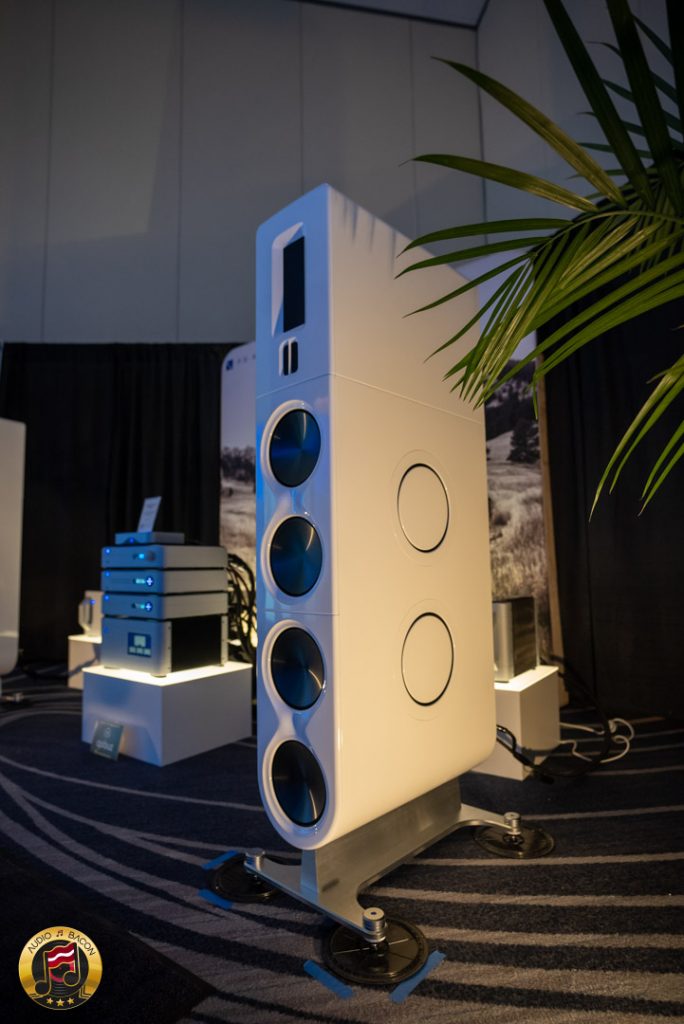
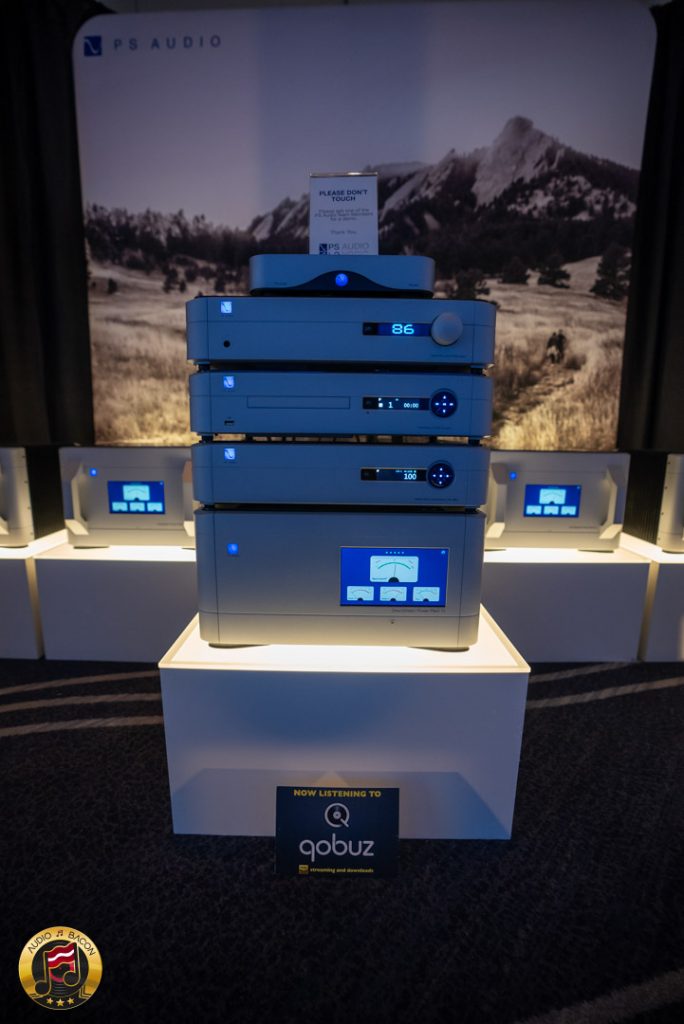


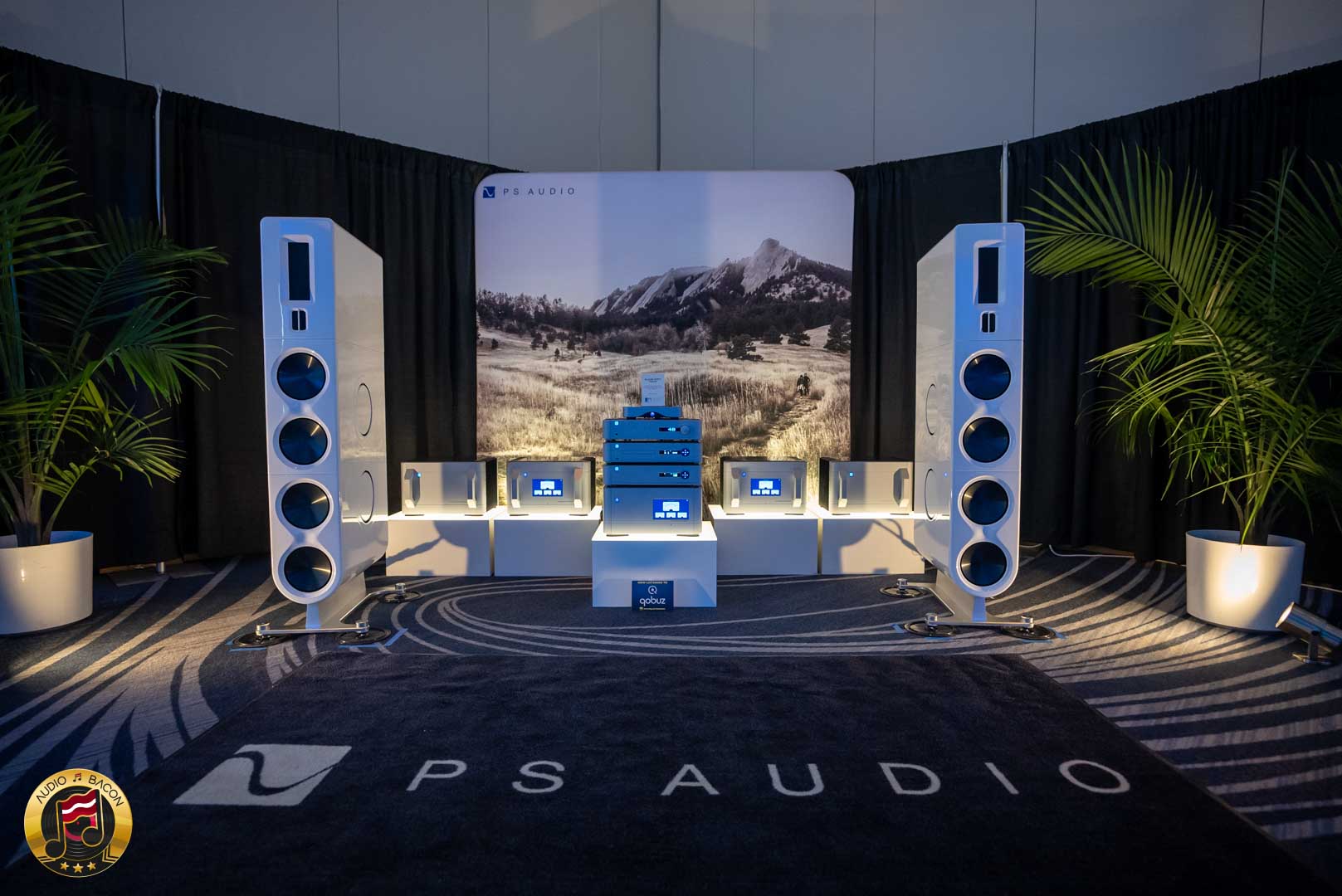
PS Audio probably had the busiest room at the AXPONA this year. Every time I passed by, there were lines extending out the doors. Consequently, I just couldn't get a seat at the sweet spot. Thankfully on Sunday morning, the man himself, Paul McGowan, gave me the golden seat for about 20 minutes!
There weren't many people in the room and so the noise floor was going to be as low as it was going to get. What's even crazier is that they accommodated my request to swap between the aspen FR20 ($18,999) and FR30 ($29,999) for a quick A/B comparison. What a treat!
I grabbed the iPad and selected Alice in Chain's Brother off the MTV Unplugged album and Laufey's Let You Break My Heart Again. Not a lot of people seem to have heard of this talented Icelandic singer-songwriter and musician, but she's has an amazing voice - and I have a feeling her music will show up more in these listening rooms.
As I was wandering around the show, I overheard some attendees mention that the new PS Audio speakers had a little too much harshness in the highs. But when I finally got to experience them for myself, I found the opposite to be true. In fact, the highs were ever gently rolled off, resulting in a very comfortable and non-fatiguing listening experience - but still very open and spacious. I even put on a Paramore live track and was pleasantly surprised at how it wasn't abrasive at all. Maybe system adjustments were made...or people just hear differently.
The overall presentation of the sound was very smooth and sculpted, with performers sounding naturally outlined and placed in a three-dimensional space in the room. It was impressive how every aspect of the music had a strong presence and grounded feel, something usually only achieved with higher end systems. To top it off, the soundstage was large and deep, with perfect localization of performers and their instruments.
PS Audio FR20 vs FR30
What were the subjective differences between the FR20 and FR30? Again - take this with a pound of salt. Although the tonal color of both the FR20 and FR30 were similar (warm/dark-ish gray), I thought the FR30 sounded fuller, more forward, meatier, and also quieter. It just had a more dense, and piston-like, propulsive sound that gave it more of a "wow factor." Bass was more impactful, cleaner, and had the appropriate mass for the voice or instrument being played. Whereas on the FR20, the variant in density was more uniform and not as distinguished. I also felt the FR30 had better delineation and air around the performers. Granted, the FR30 is $11,000 more moola. However, I suspect most will be more than happy with the FR20.
Now, these speakers weren't the last word in low-level textures, ultimate transparency, or had the most expressive highs, but it had that very liquid, wholesome, and musical sound that was very enjoyable to listen to. In other words, it's a sound that doesn't need your full attention to be fully appreciated. Just kick back and relax with favorite glass of whiskey - and enjoy the music. Which I think aligns perfectly with PS Audio's goal with the Aspen loudspeakers.
Time and time again, it's really tough to go wrong with any of PS Audio's offerings. That's why they're one of the most knowledgeable and successful players in the business. I think their "Ask Paul" series is a testament of how much they care about educating everyone in the hobby.
Overall, I thought it was the best this room as ever sounded and had a delightful time listening to the entire PS Audio loom. Thank you again PS Audio for giving me this wonderful opportunity.
Equipment List
- Source AirLens - $1,999
- DAC DirectStream DAC MK2 - $7,999
- Preamplifiers:
- BHK Signature Preamp - $6,999
- Stellar Phono Preamp - $2,999
- Amplifier:
- BHK Signature 600 Monos - $32,498/pr.
- Regenerators:
- 2 P20 PowerPlants - $9,999
- 1 P15 PowerPlant - $7,999
- Loudspeakers:
- Aspen FR30 - $29,999/pr.
- Aspen FR20 - $18,999/pr.
- Power cords:
- Paul’s Reference AudioQuest Suite (price not mentioned)
Gershman Loudspeakers 30th Anniversary Grand Avant Garde


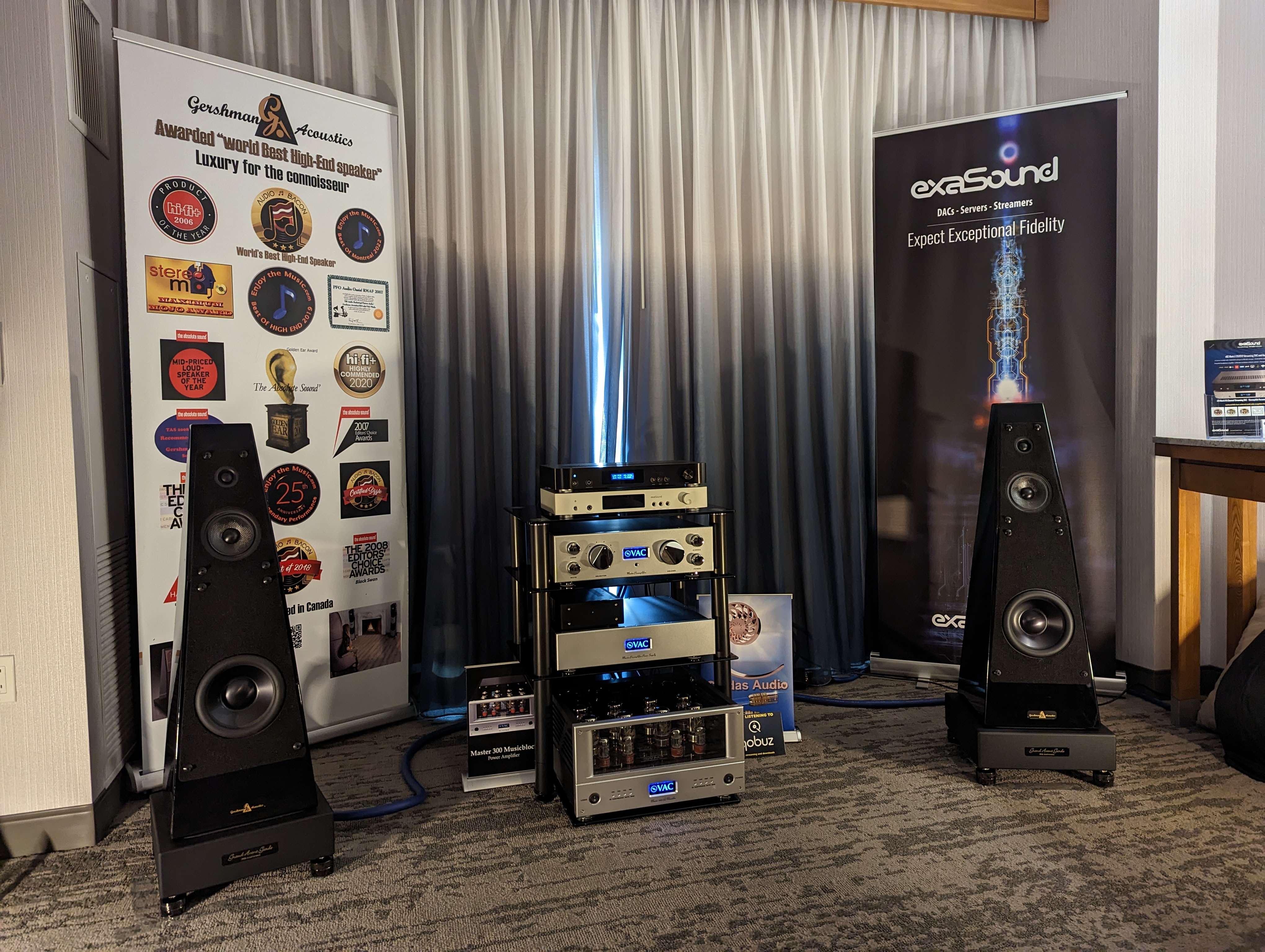
As you probably know by now, I've purchased the Gershman Acoustics Grand Avant Garde last year in gorgeous red wine. Regardless to price, there are very few loudspeakers out there than can match the timbre and natural resolution of these speakers. And after my recent visit, I'm even more convinced of this.
The new 30th Anniversary Edition has a new base:
The Grand Avant Garde incorporates Eli Gershman new Patent Pending design, The BCT (Back-wave Control Technology) and, as the name suggests, along with the resistive line in the main bass enclosure, is designed to trick the bass units into ‘seeing’ a larger volume than is actually there. In addition, the combination of tuned venting and the interior matrix constructed within the oblong base helps create a pressure differential between the main cabinet and the base. That draws the back-wave energy into the acoustically and mechanically separate base element where it is dissipated, reducing both intermodulation distortion and re-radiation through the cone.
With the new base, these speakers reportedly offer an additional 3 dB on the low end, which is quite impressive considering that I'm still working on minimizing vibrations from my windows and in-wall heater from the original Grand Avant Garde with the larger base.
I listened to Klaus Badelt's track "Morlocks Attack" during the demo and was completely immersed in the sonic landscape. From the vibrant strings to the heart-pounding percussion. The clarity and separation of the instruments were outstanding, allowing me to hear every detail of the arrangement. The dynamic range of the speakers was impressive, creating a powerful and engaging listening experience that left me wanting more. Overall, the performance demonstrated the skillful engineering and design that went into these amazing speakers.
The show system's tonal color was a bit on the cooler side, although I've heard these speakers sound warmer when paired with other equipment. Nonetheless, the room had amazing transparency and depth. Unfortunately, I didn't get to hear the Studio XdB at the time, but I've heard only great things about it. Perhaps a review at a later time.
On a personal note, I'm currently looking into promoting more warmth in my pair of Avant Gardes. One option I'm exploring is using monoblocks in my system and possibly switching my DAC. If you have any recommendations or suggestions on how to achieve this, please leave them in the comments or feel free to send me an email.
Equipment list
- Gershman Acoustics 30th Anniversary Grand Avant Garde - $17,000
- Gershman Acoustics Studio Xdb with integreated Bass-Trap / stand - $12,000
- exaSound Audio Design s82 Mark II Streaming DAC and Roon Server $7,599
- exaSound s88 Mark II 8-Channel Streaming DAC - $7,599
- VAC Master 300 Amplifier - $42,000
- VAC Master Preamplifier - $38,000
- Cardas Cabling
Klipsch
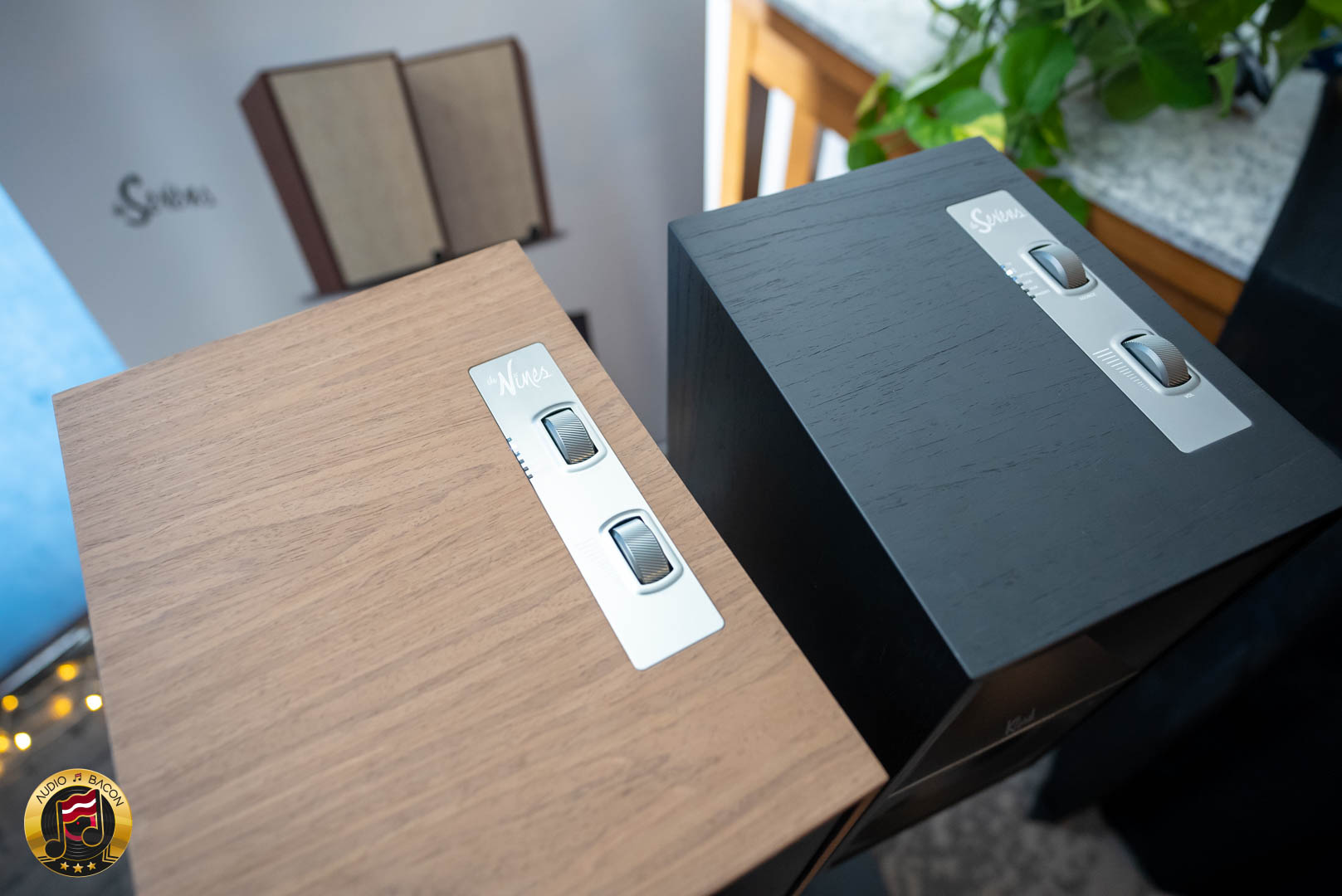
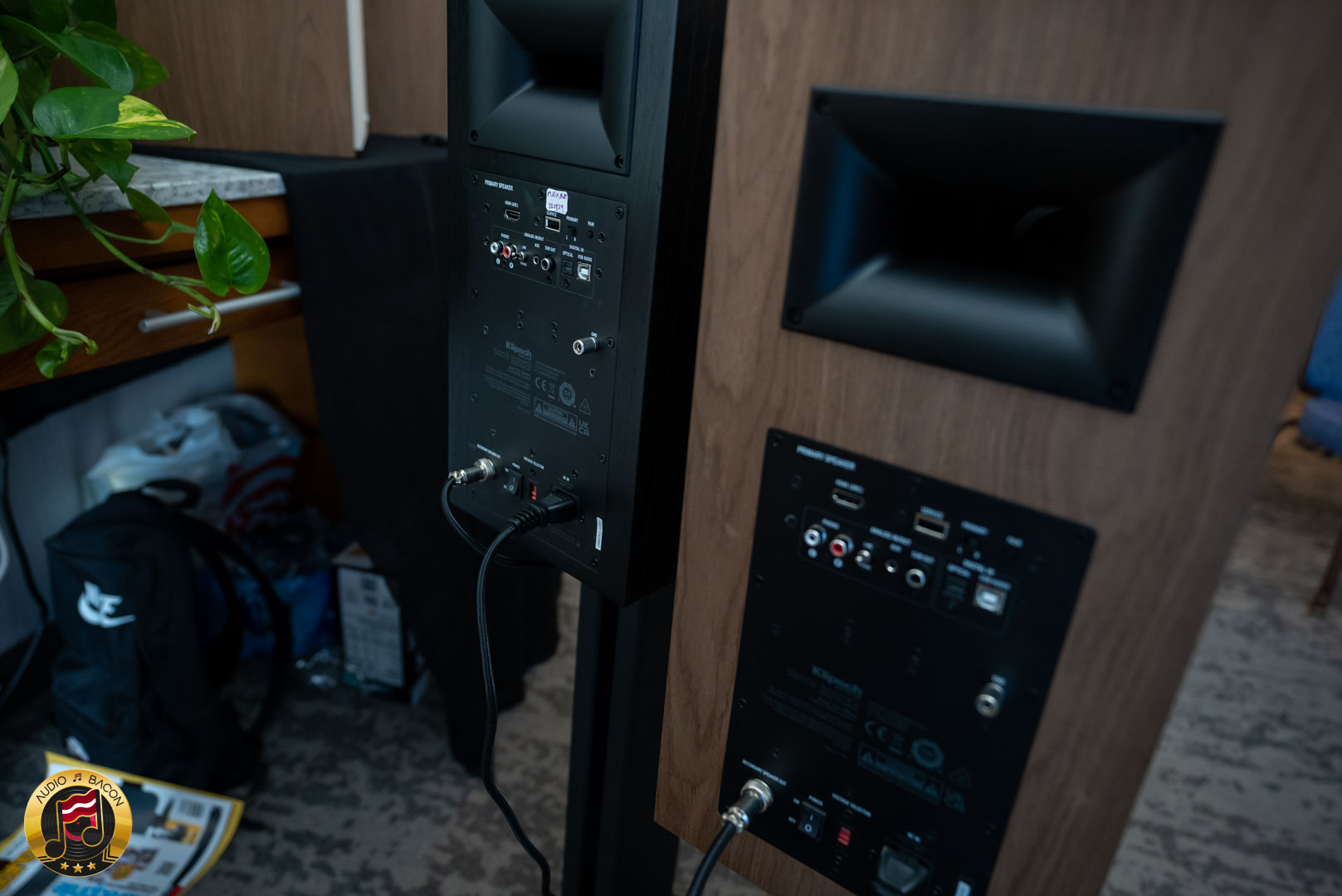
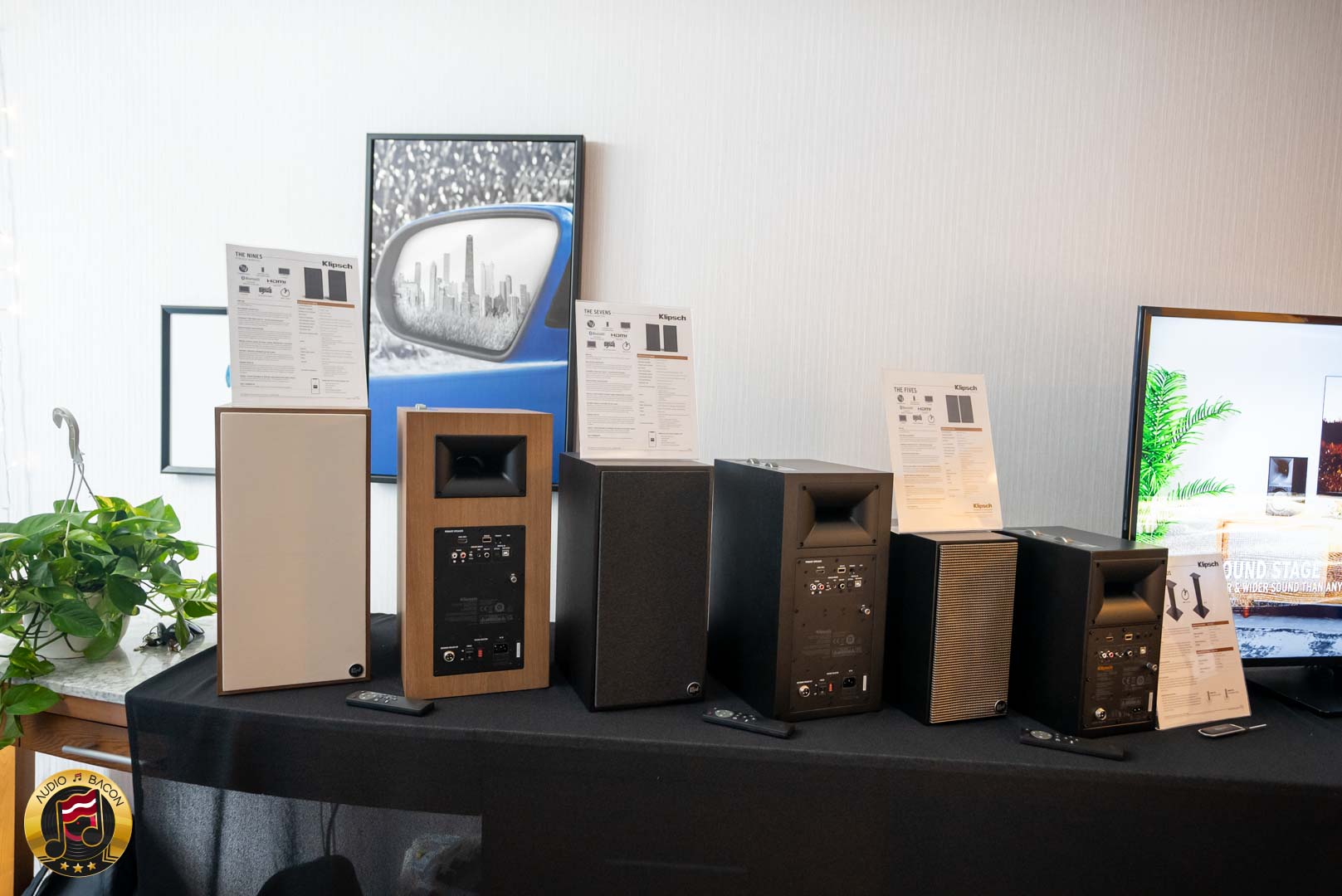
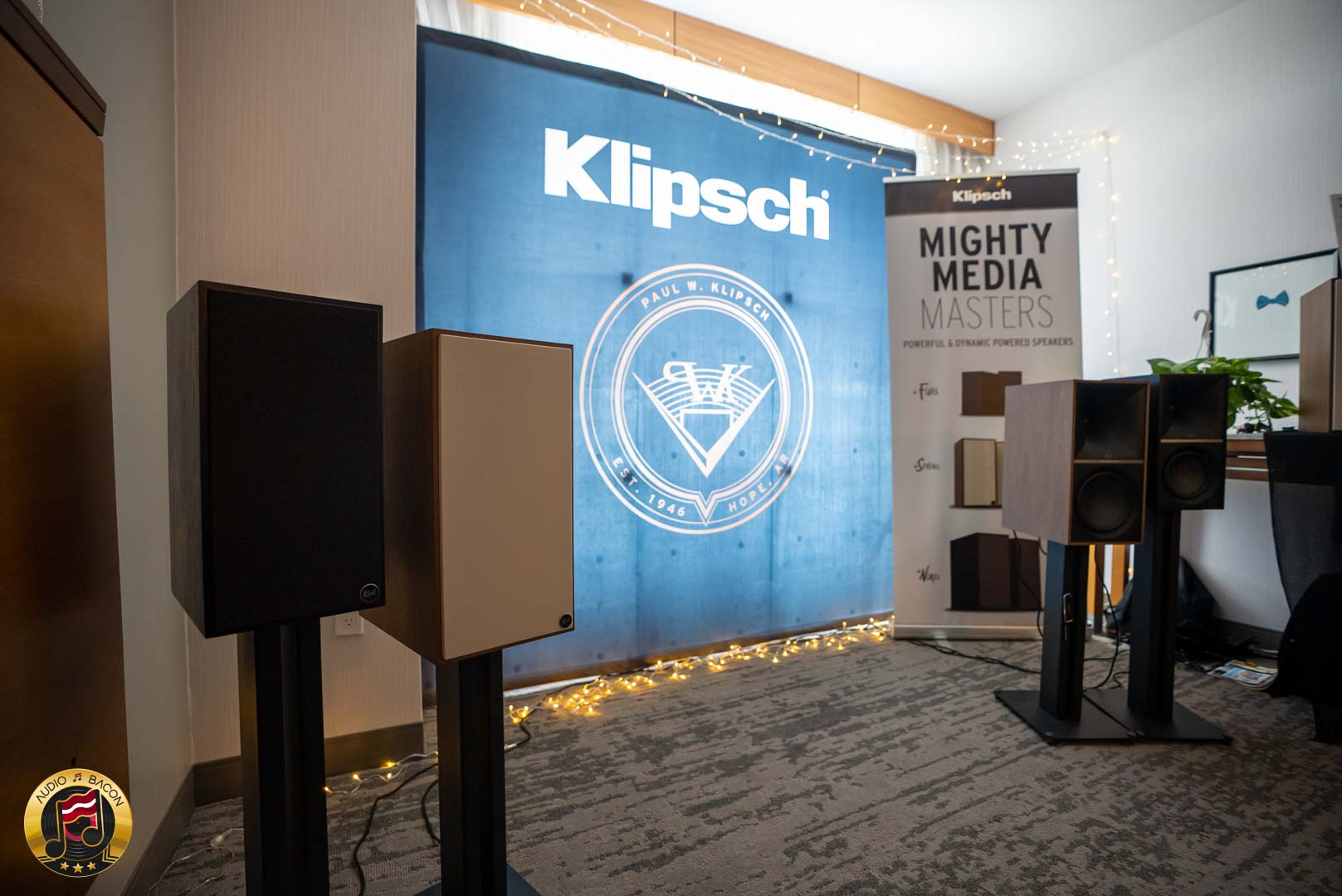
I've got some friends who don't want to mess around with cabling, amplifiers, and a bunch of source devices to get great sound. Maybe Klipsch has the answer! Their Heritage wireless speaker series just got a little bigger with the addition of the Sevens and Nines. These new models join the already popular The Fives, which have been getting glowing reviews since last year.
All three speakers share the same slick design and awesome features, including Bluetooth wireless tech, digital optical and analog RCA inputs, USB ports, and a subwoofer output. The difference between them is the size of the woofer and the amount of power they pack. The Fives have a 4.5-inch woofer, The Sevens have a 6.5-inch woofer, and The Nines boast an impressive 8-inch woofer.
What makes Klipsch's Heritage Wireless powered speakers so special is that they have built-in amps, so they're easy to set up without extra equipment. You can even hook up your TV to the primary speaker through the HDMI-ARC input. And if you're into vinyl, you'll dig the internal MM phono stage that lets you connect your turntable directly to the speakers.
The Nines and Sevens are the bigger, badder siblings to The Fives, with more power and a larger woofer for deeper bass. But what really sets these speakers apart is their compatibility with the Klipsch Connect App. With it, you can tweak EQ settings, subwoofer volume, and more. So whether you're listening to hi-res audio or streaming via Bluetooth, these speakers will crank out crystal-clear sound with powerful bass and minimal distortion.
If I've got time, I'm going to try and snag these for a review.
Yamaha


Yamaha makes their debut at AXPONA this year and I thought they did a wonderful job. They showcased some impressive new products, including the R-N2000A streaming amp and NS-2000A floor-standing speakers. The R-N2000A receiver features exceptional build quality with superb channel separation and signal-to-noise performance. It also comes with a top-of-the-line ESS Sabre DAC chip and provides access to Yamaha MusicCast streaming services. The NS-2000 floor-standing speaker incorporates patented technologies from Yamaha's flagship NS-5000 speakers and uses a 3-way, 4-driver configuration with newly developed materials for each driver.
In addition, Yamaha displayed a prototype HA-L7A Desktop DAC/Amp combo and YH-5000SE headphones. The HA-L7A DAC amp combo features separate DAC and Amp components, and the amp section is based on proprietary technology from Yamaha.
The YH-5000SE Headphones
This is where I spent a bulk of my time. I've never actually seen or heard these products before. So I sat my gimbal down and gave them a good listen. Honestly, I was impressed with those headphones. Without knowing the price ahead of time, I thought they were clearly in the higher end of the spectrum. It just had this smooth and dynamic quality that typically only resides in top-tier headphones. Piano and vocals were just full-bodied and very well articulated. It was a darker sound which I enjoyed and it was balanced in detail and low-end heft. You were able to feel the music and clearly discern the layers of the music. Admittedly, a slight sticker shock at $4,995, but I would love to get this combo in for a deeper listen.
Overall, Yamaha's new products at the show were impressive, and the R-N2000A and NS-2000 speakers are now available for pre-order.
Equipment List
- 5000 Series Hi-Fi:
- NS-5000 Speakers (Black) (Bundle: pair of speakers w/stands) - $14,999.95 bundle
- C-5000 Pre-Amp (Black or Silver) - $9,999.95
- M-5000 Amplifier (Black or Silver) - $9,999.95
- GT-5000 Turntable (Black) - $7,999.95
- A-S Series Integrated Amps:
- A-S3200 Integrated Amplifier (Black or Silver) - $7,999.95
- A-S2200 Integrated Amplifier (Black or Silver) - $4,499.95
- A-S1200 Integrated Amplifier (Black or Silver) - $2,999.95
- 2000 Series Hi-Fi:
- R-N2000 Network Stereo Receiver (Black or Silver) - $3,999.95
- NS-2000A Floor-standing Speakers (Black) - $3,999.95 each ($7,999.00 pair)
- CD-S3000 CD Player (Black or Silver) - $6,999.95
- 5000 Series Headphones:
- YH-5000SE Headphones with stand and cables - $4,999.95
- HA-L7A Headphone Amplifier (prototype shown at AXPONA – this product has not been formally launched yet) - TBD
CSS Typhon, Galion Audio


I recently had the pleasure of listening to the CSS Typhon loudspeakers and Galion TS120 amplifier, designed by YouTube sensations Jay Lee and Thomas & Stereo. These are Canada's finest audiophiles. As a big fan of both their channels, it was a delightful surprise to finally meet these two in person.
CSS Typhon Loudspeakers
The Typhon speaker is a flagship model from CSS Audio designed in collaboration with Jay Lee. It features a top module housing a soft dome tweeter and a 7-inch paper mid-woofer, while the bottom module houses two paper 7-inch woofers crossing over at around 200 Hz. The top module is able to move up or down the vertical axis by 5 degrees in 1-degree increments for perfect on-axis time alignment according to the ceiling height. The design allows for a jaw-dropping 20 Hz full-range response in the room without the need for a subwoofer. The crossover was fine-tuned to balance clarity, musicality, and authority in the bottom end.
Overall, the Typhon speaker's unique design and features make it an audiophile's dream. The separate top and bottom modules allow for unparalleled on-axis time alignment, resulting in a rich and detailed sound. The sealed speaker design combined with the two paper 7-inch woofers provide a full range of sound, and the careful tuning of the crossover ensures that the sound is clear, musical, and authoritative. With the Typhon speaker, CSS Audio and Jay Lee have created a speaker that is truly one of a kind.
Galion TS120 Tube Amplifier
The Galion TS120 Tube Integrated Amp is a unique blend of a tube and solid-state amp, offering the best of both worlds. It has a smooth, airy, and holographic soundstage, along with the speed, control, dynamics, and bass of a solid-state amp. The TS120 includes patented technology that allows the user to choose between high current Class A mode or high wattage Class AB mode, providing versatility in sound quality. Unlike other tube amplifiers, the TS120 excels in dynamic contrast and bass control, thanks to its beefy transformers and high-quality build.
The TS120 also features a wide, holographic 3D soundstage, and tone control specifically designed to minimize sibilance, a common issue in other amplifiers. The Galion team spent months voicing the TS120 to ensure it has a balance between detail and brightness, without causing listening fatigue. There are two versions of the TS120 available: the standard edition, which has a warmer sound and punchier bass, and the special edition, which has a more neutral sound with a nuanced bass and a smoother midrange. The TS120 has been designed to support only high-power output tubes to maintain optimal sound quality.
The Sound
Thomas sat me down and said, "Check out this bass." He hit play on "Make Us Stronger" by Ghost Rider. The moment those Typhon speakers paired with the 30-watt Galion amplifier kicked in, I couldn't help but grin. The textural, energetic, and transparent sound immediately hooked me. Tight and clean bass, an expansive soundstage, and remarkable grip and control on electronic synths and drum hits created an immersive experience that left me in awe.
As the track progressed, the Typhons flexed their muscles, delivering sonic transparency and unveiling the subtle shifts in timbre and tonality with finesse. The crystalline treble added a sparkle to the engaging and dynamic listening experience, perfectly balancing the robust bass. I was struck by how the Typhons could handle the complex interplay between the various elements of the track without compromising on detail or musicality.
So, what's the verdict? The Typhon loudspeakers and Galion pairing knocked it out of the park, conveying the dynamic range, energy, and transparency demanded by this high-energy track. The cool tonality, textured bass, and expansive soundstage provided an immersive listening experience for these ears.