
Build & Setup
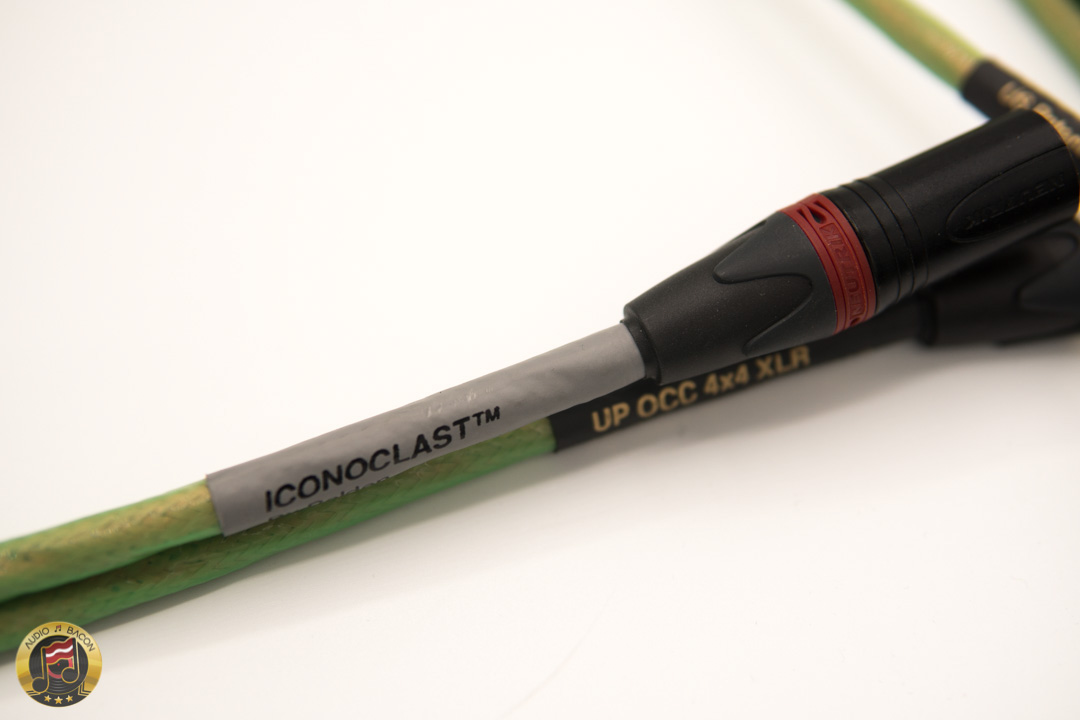
Iconoclast sent us the following cables:
- two sets of the 4×4 UP-OCC XLR cables (Series 2)
- a pair of the 1x4 UP-OCC RCA cables (Series 2)
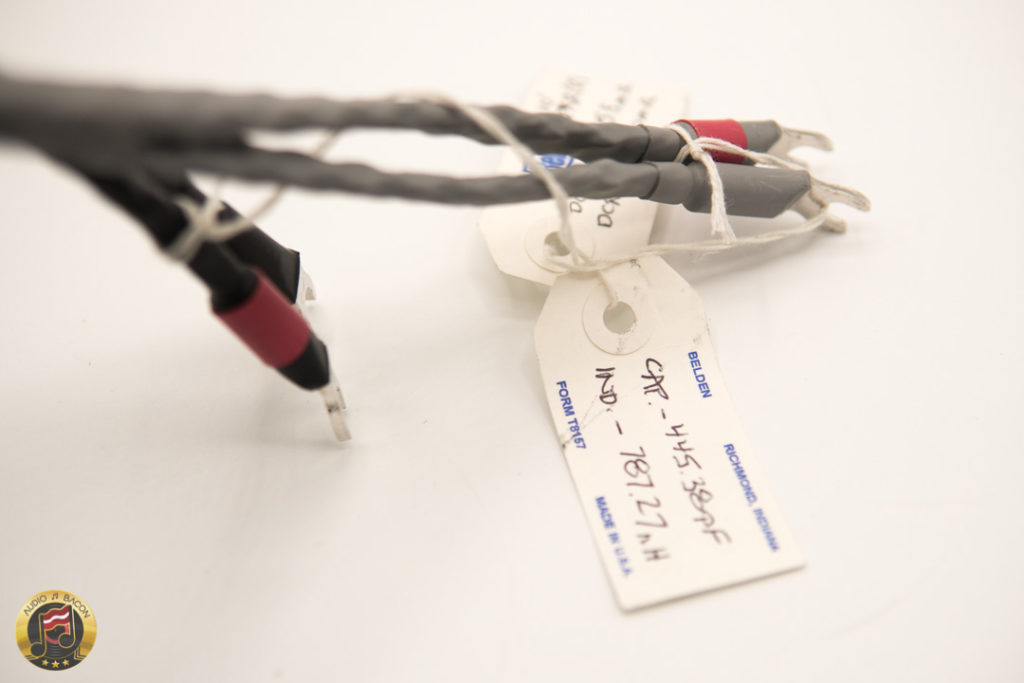
- a pair of SPTPC speaker cables with WBT rhodium spades.
Before we begin on what we heard, here are some physical observations:
Stiffness and Bend Radius
Bear in mind, these cables are a bit stiffer than the average cable - especially the speaker cables.
Because of the air core (mostly air dielectric) design, it's very important not to bend the cables in a way it doesn't respond to. Galen advises to let it flow via it's natural bend. For the XLR interconnects, that can be as much as 1.5 meters and 0.75 meters for RCAs. You'll want to plan accordingly when ordering your cables to make sure you have ample enough length.
The recommended bends are 10X the cable diameter for the XLR and 8X for the RCA. The RCA does not need to accept up to a 180-degree "torque twist" for connector polarization. So it can be bent in a smaller radius and total length as there is no torque to be distributed along the length of the cable. This is why RCA can be SHORTER than the XLR as they have but ONE physical stress to accept, and that is the just the bending stress but not the torque axial stress, like the XLR.
Matched Pairs
If you're buying multiple pairs, do note that each set of cables are a matched pair. Every cable is measured for various things including resistance, capacitance, and inductance so that they are nearly identical to each set. This is to ensure the greatest congruence between both channels. We don't know of any other company who does this.
Different Color, Different Copper
The colors of the cable you get may be different than what's pictured. The color designates the quality of the copper used. What we have pictured is the UP-OCC (Ultra Pure Onho Continuous Cast) 99.99998% 6N copper based interconnects. Regardless of the copper choice you choose - the physical design of the cables are the same.
Cable Break-In
Galen himself doesn't break in cables. Maybe it's a tip of the hat to their design philosophy but we did observe that the cables sounded great out of the box. However, for the purposes of this review, we did break in the cables for over 200 hours anyway.
Setup
- Power Conditioning:
- A single High Fidelity Cables MC-1 PRO was plugged into the same duplex as the power conditioner
- The Synergistic Powercell PC12SE with the Galileo upgrade and upgraded to the Blue Duplexes, connected to an SR Blue Outlet.
- Where applicable, devices were connected to the Synergistic Research Active Ground Block SE with HD grounding cables (RCA).
- Source:
- Lumin S1 Streamer/DAC
- Ethernet: SOtM dBL-CAT7 ethernet cable, Synergistic Research Atmosphere X Ethernet Reference
- Power: Synergistic Research Atmosphere Level 3 Digital, Au24 SX powerChord MP, High Fidelity Cables Reveal Power Cable
- Isolation: Synergistic Research Tranquility Base UEF XL
- Lumin S1 Streamer/DAC
- Preamplifier:
- Amplifier:
- PS Audio BHK Signature 250 Stereo Amp
- Interconnects: Iconoclast by Belden UP OCC XLR, Synergistic Research Euphoria XLR, Audience Au 24 SX XLR
- Power: Shunyata Research Alpha Ztron HC power cable, Synergistic Research Atmosphere Level 3 HC, Au24 SX powerChord HP, High Fidelity Cables Reveal Power Cable
- PS Audio BHK Signature 250 Stereo Amp
- Speakers:
- B&W 804D2
- Speaker cables: DanaCable Sapphire MK.2 speaker cables, Synergistic Research Euphoria Speaker Cables, Audience Au 24 SX Speaker Cables, Iconoclast by Belden SPTPC Speaker Leads
- B&W 804D2
- Network:
- Router/Switch: SoTM sNH-10G Audiophile Grade Network Switch, Netgear Orbi Wireless Mesh System
- Ethernet: SOtM dCBL-CAT7 set, Synergistic Research Atmosphere X Reference Ethernet cable set
- Roon Nucleus Server with 2TB SSD with SOtM SPS-500 Power Supply and a Vovox Textura power cord